

What are Low-Side and High-Side Motorcycle Crashes?
Bill Allen | October 16, 2025 | Uncategorized
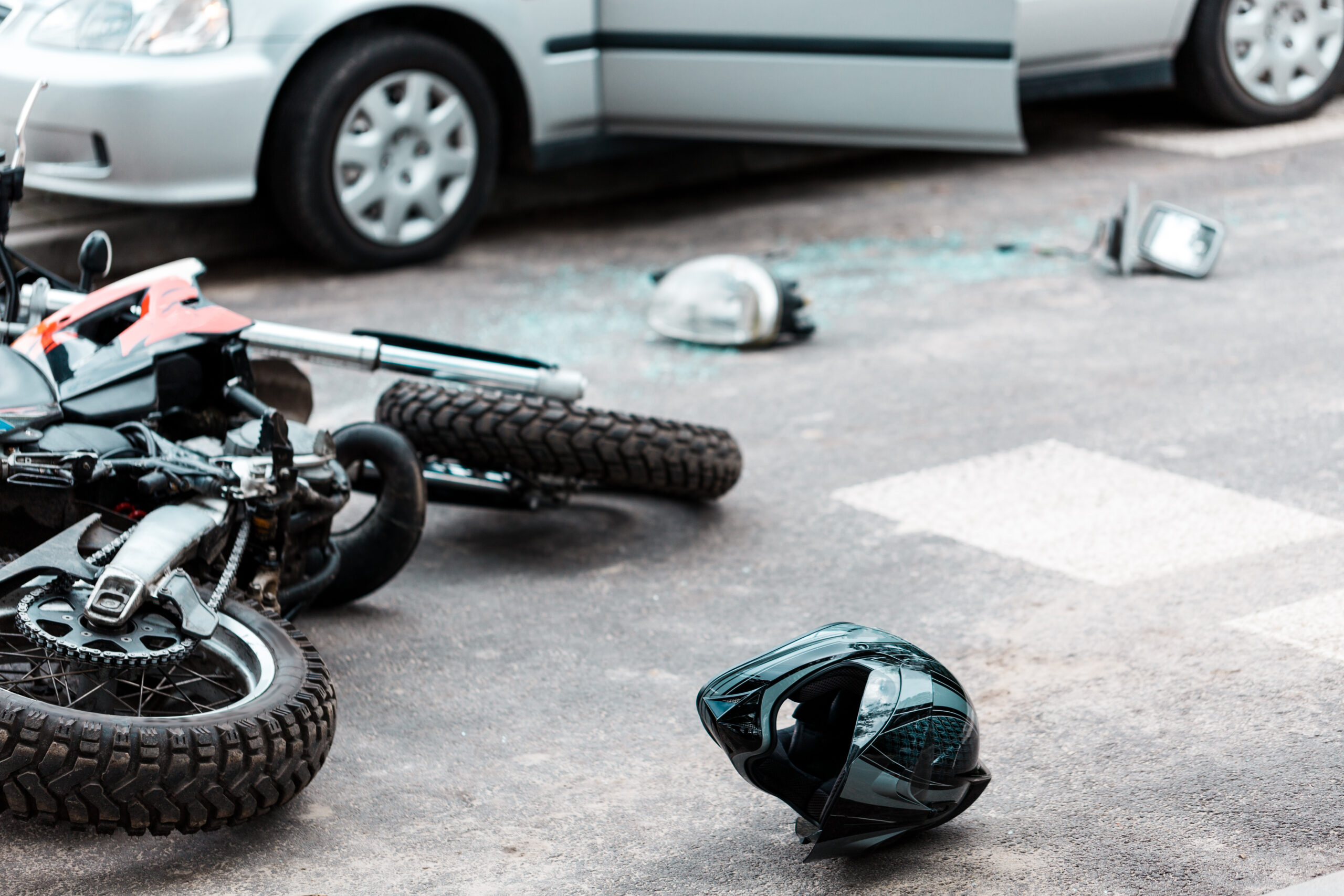
Motorcycle accidents are among the most dangerous types of roadway collisions, often resulting in severe injuries, long-term disabilities, or even fatalities. Among the many types of motorcycle crashes, low-side and high-side accidents are two of the most common and most misunderstood.
Understanding Motorcycle Dynamics
Motorcycles are inherently less stable than cars because they balance on two wheels. When a rider leans into a turn or maneuvers suddenly, the motorcycle’s tires rely on friction and traction to stay upright.
Any sudden loss of traction due to road conditions, braking errors, or obstacles can cause the bike to slide or flip. This is where the distinction between low-side and high-side crashes comes into play.
What Is a Low-Side Motorcycle Crash?
A low-side crash occurs when the motorcycle slides out from underneath the rider on the same side they are leaning into during a turn. This type of crash is often the result of losing traction between the tires and the road surface.
For example, if a rider takes a curve too fast, brakes abruptly while leaning, or encounters a patch of gravel or oil, the tires may lose their grip. When that happens, the bike can slide out from under them, and both rider and motorcycle fall and slide along the pavement.
Common Causes of Low-Side Motorcycle Crashes
Common causes of low-side crashes include:
- Entering a corner too quickly
- Sudden braking while leaning into a turn
- Hitting slippery surfaces such as oil, sand, or wet pavement
- Worn-out or improperly inflated tires
While low-side crashes are typically less catastrophic than high-side accidents, they still pose serious risks. Riders often suffer injuries such as road rash, fractures, or concussions from sliding along the asphalt.
What Is a High-Side Motorcycle Crash?
A high-side crash is generally considered far more dangerous than a low-side crash. High-side crashes occur when the rear wheel of a motorcycle loses traction — often due to excessive braking or sudden throttle changes — and then abruptly regains it.
When traction is suddenly restored, the motorcycle’s momentum can violently throw the rider up and over the bike, often resulting in severe impact injuries. Imagine a rider braking hard on a curve, causing the rear tire to skid sideways.
If the tire suddenly regains traction while still sideways, the bike’s rear end snaps back into alignment with tremendous force, launching the rider into the air. High-side crashes frequently result in catastrophic injuries such as traumatic brain injuries, spinal cord damage, or multiple fractures.
Common Causes of High-Side Crashes
Common causes of high-side motorcycle crashes include:
- Sudden release of the rear brake after a skid
- Rapid downshifting that locks the rear wheel
- Abrupt throttle changes mid-turn
- Slippery or uneven road conditions
Because high-side crashes involve such sudden and forceful ejection, they often lead to the most severe and life-altering injuries, making prevention and proper safety measures absolutely critical.
Injuries Commonly Seen in Motorcycle Crashes
Regardless of whether a crash is low-side or high-side, the injuries can be life-changing. Common injuries include:
- Traumatic brain injuries (TBI): Even with a helmet, head injuries are common and can have lasting effects.
- Spinal cord injuries: These can lead to partial or complete paralysis.
- Fractures and dislocations: Arms, legs, and collarbones are particularly vulnerable.
- Road rash: Severe abrasions caused by sliding along the pavement, which can lead to infections and permanent scarring.
- Internal injuries: Damage to organs or internal bleeding may not be immediately apparent but can be fatal without prompt treatment.
These injuries can have long-lasting physical, emotional, and financial consequences, underscoring the importance of seeking prompt medical care and exploring your legal options after a motorcycle crash.
Florida Motorcycle Laws and Your Rights
Motorcycle accidents are governed by state-specific laws, and Florida is no exception. In Florida, motorcyclists must follow all traffic rules applicable to vehicles, and failing to do so can impact liability in an accident case.
Unlike car accidents, Florida’s no-fault insurance law does not apply to motorcycles. This means riders cannot rely on personal injury protection (PIP) coverage for medical bills after a crash — they must seek compensation through a personal injury claim against the at-fault party.
Because of this distinction, proving negligence is crucial. Evidence such as police reports, accident reconstruction, and witness testimony can help establish who was at fault — whether it was a negligent driver who cut you off, a government entity responsible for dangerous road conditions, or a manufacturer that produced defective motorcycle parts.
Steps To Take After a Motorcycle Crash
If you are involved in a motorcycle crash — whether low-side or high-side — taking the right steps immediately afterward can significantly strengthen your legal claim:
- Seek medical attention: Even if you feel fine, some injuries may not be apparent right away.
- Report the accident: Contact law enforcement so that an official report is filed.
- Document the scene: Take photos of the roadway, vehicle damage, and any visible injuries.
- Gather witness information: Eyewitness accounts can support your version of events.
- Consult a motorcycle accident attorney: A lawyer can help protect your rights and pursue compensation for medical bills, lost wages, pain and suffering, and more.
These steps can help preserve your claim and help ensure you receive the compensation you deserve.
Protecting Yourself and Your Future
Low-side and high-side motorcycle crashes are more than just physics — they’re life-altering events. Understanding how these accidents occur and knowing your legal rights under Florida law is essential if you hope to recover physically, emotionally, and financially.
Motorcycle riding comes with inherent risks, but when crashes happen due to someone else’s negligence, you should not bear the burden alone. Legal help can make the difference between a future defined by medical debt and one where you can focus on recovery and rebuilding your life.
For help, contact Allen Law Accident & Injury Lawyers to schedule a free consultation with a Gainesville motorcycle accident lawyer.
If you need legal assistance, contact the Gainesville motorcycle accident lawyers at Allen Law Accident & Injury Lawyers at your nearest location to schedule a free consultation today, we’re open 24 hours daily.
We have three convenient locations in Marion County and Alachua County, North Central Florida:
Allen Law Accident & Injury Lawyers – Gainesville Office
2550 SW 76th St #150
Gainesville, FL 32608
(877) 255-3652
Allen Law Accident & Injury Lawyers – Downtown Gainesville
621 W University Ave
Gainesville, FL 32601
(866) 928-6292
Allen Law Accident & Injury Lawyers – Ocala Office
112 S Pine Ave
Ocala, FL 34471
(352) 351-3258